



RESEARCH GROUP
Algebra and Combinatorics (ALCOM)
Inicio > Investigación > Research Groups > Algebra and Combinatorics Research Group (ALCOM)
ABOUT OUR Group
The Algebra and Combinatorics Research Group (ALCOM), affiliated with the School of Mathematics at the Universidad Industrial de Santander, conducts research in algebra, combinatorics, and their applications. Its mission is to establish itself as a regional and national leader with international recognition in these fields, distinguished by the excellence of its scientific output, the global impact of its research, and its commitment to educating future generations of leading mathematicians. The group also supervises undergraduate and graduate research projects related to its areas of expertise.
ALCOM organizes a weekly seminar in which students and faculty present progress on their thesis work and institutional research projects. The seminar also serves as a forum for national and international visiting scholars to present their research contributions. Within university-approved research projects led by the group’s faculty, students participate as research collaborators, often leading to thesis projects and joint publications. In addition, ALCOM members actively participate in major conferences and meetings in the field of algebra, a record that is reflected in the group’s GrupLAC profile maintained by Minciencias.

Héctor Edonis
PINEDO TAPIA
Research Group Director
Contact us
RESEARCH Lines
Partial Group Actions
This research line studies the theory of partial group actions, a generalization of group actions in which group elements act only on subsets of a given set rather than on the entire set. Partial group actions have had significant impact on C*-algebras, topology, dynamical systems, and algebra, where they have led to the generalization of classical results and the development of new constructions and applications.
p-Adic Analysis and Local Zeta Functions
This research line focuses on p-adic analysis and local zeta functions, two areas that have attracted considerable interest in recent years due to their applications in mathematical physics, biology, psychology, macrodata (big data), and other scientific disciplines. Much of this development has been motivated by a hypothesis in particle physics suggesting that, at the Planck length (approximately 10−3310^{-33}10−33 cm), space-time possesses a non-Archimedean structure.
Within this framework, local zeta functions play a significant role in mathematics because of their connections with fields such as partial differential equations, number theory, and singularity theory, among others. These functions can be defined over any local field KKK, making it possible to investigate both Archimedean and non-Archimedean cases, with the latter constituting the primary focus of this research line.
Algebraic Function Fields, Coding Theory, and Cryptography
This research line explores the interaction between algebraic geometry, algebra, and information security. In particular, it focuses on the study of algebraic curves and their function fields for the construction of error-correcting codes with excellent performance characteristics. These codes are fundamental to communication and data storage systems, where they enable the detection and correction of transmission errors. The research also investigates their algebraic and computational properties, together with the development of efficient encoding and decoding algorithms.
From a cryptographic perspective, this research line examines the implementation of these algebraic-geometric codes in the design of cryptographic schemes resistant to both classical and quantum attacks. By combining theoretical and computational tools, it contributes not only to advances in mathematics but also to solving critical challenges in information security and data transmission.
Discrete Mathematics
This research line focuses on the study of finite or countably infinite structures—such as integers, graphs, designs, and logical propositions—while maintaining strong connections with combinatorics, optimization, and the theories of graphs, designs, and numbers, as well as with the development of algorithms. Its objective is to design efficient theoretical and computational tools for modeling and solving complex problems in computer science, communications, and logistics. By combining algebraic and computational techniques, this research line contributes both to the advancement of fundamental mathematics and to the development of cutting-edge solutions in science and technology.
Ring and Group Theory, and Group Rings
This research line focuses on the theory of group rings, a concept with a long history that first appeared implicitly in Arthur Cayley’s 1854 work on the abstract theory of groups and was introduced explicitly by Walther von Dyck in his 1882 doctoral dissertation. Early studies in this area led to the first results on complex representations of finite groups, inspiring subsequent research by mathematicians such as Emmy Noether, Richard Brauer, and Issai Schur. Beginning in the 1960s, interest in group rings was further stimulated by Irving Kaplansky’s influential list of open problems.
Group ring theory serves as a meeting point for several branches of algebra. Owing to its central role in the development of representation theory, it is closely connected to both group theory and ring theory, with many results intimately linked to the fundamental principles of these disciplines. Since group rings over the integers have attracted particular attention, algebraic number theory also plays a significant role in their study. Furthermore, these structures are closely related to other areas, including homological algebra, algebraic topology, and K-theory. In recent years, their application to the theory of error-correcting codes has gained increasing importance in digital communications, enabling the design of more efficient and reliable codes.
Commutative Algebra and Projective Geometry
Commutative algebra, together with projective geometry, provides the mathematical foundation of modern algebraic geometry. While commutative algebra studies commutative rings and modules—serving as the precise language for formulating the study of solutions to polynomial equations—projective geometry provides the natural geometric setting in which these equations are analyzed, making it possible to solve complex problems of intersection (such as the intersection of parallel lines at infinity).
This research line explores the deep interplay between algebra and geometry. Specifically, it is organized around three main areas:
- The Duality Between Rings and Varieties: In projective geometry, homogeneous polynomials define subsets (projective varieties) that correspond algebraically to ideals within a polynomial ring.
- Hilbert’s Nullstellensatz (Zero Locus Theorem): This fundamental theorem serves as the bridge between abstract commutative algebra and geometry by establishing an exact correspondence between radical ideals and algebraic sets.
- The Construction of Projective Space: Projective space is rigorously defined through the ring of homogeneous coordinates or, alternatively, through the concept of projections on quotient spaces and modules.
Modern applications arising from the convergence of these two disciplines include the solution of advanced problems in number theory, cryptography, birational geometry, and theoretical physics (such as string theory), where the study of polynomial forms and their module spaces relies on the rigorous methods of both algebra and geometry.
Algebras with Polynomial Identities
This research line focuses on polynomial identities, also known as the theory of PI-algebras, a relatively recent field whose major development has taken place over the past seventy years. Earlier contributions include the work of M. Dehn (1922), W. Wagner (1936), and M. Hall (1943), much of it motivated by geometry. After 1945, research on polynomial identities in algebras intensified, leading to fundamental advances through the work of I. Kaplansky and N. Jacobson. One of the field’s most important theorems, the Amitsur–Levitzki Theorem, was proved in 1950.
Many mathematicians have contributed to the development of polynomial identity theory, including Graham Higman, Masayoshi Nagata, A. I. Shirshov, Amitai Regev, Yuri Razmyslov, Claudio Procesi, Louis Rowen, Paul M. Cohn, Richard G. Swan Vaughan-Lee, Israel Herzstein, Edward Formanek, Alexei Kostrikin, Erwin Specht, Efim Zelmanov, Yuri Bahturin, Vesselin Drensky, and Mikhail Zaicev, among others. Today, the theory of PI-algebras is one of the most active areas of pure algebra, with significant research activity in neighboring countries such as Brazil and Chile. Polynomial identities are algebraic equations in several variables that hold for all possible values of the variables. Unlike ordinary equations, their purpose is not to determine the values of the variables but rather to establish a universal structural equality between two algebraic expressions.
Historically, three main research directions have emerged in the study of PI-algebras:
- First Direction: This research direction seeks to describe all algebras that satisfy naturally arising conditions. More specifically, it addresses the following question: if an algebra AAA satisfies a particular polynomial identity, what can be deduced about the structure of the algebra AAA itself?
- Second Direction: This more concrete line of inquiry focuses on the polynomial identities satisfied by a given algebra and on the classes of algebras that satisfy those identities.
- Third Direction: Closely related to the second, this research direction investigates T-ideals of identities; that is, ideals of algebras that remain invariant under certain endomorphisms.
In pursuing these research directions, investigators regularly employ advanced mathematical tools, including representations of symmetric groups, asymptotic methods for measuring the growth of codimensions, graded algebras, and other related algebraic structures.
Noncommutative Algebra and Category Theory
This research line investigates noncommutative algebraic structures and their interactions with category theory. It includes the study of Hopf algebras and their generalizations, Ore extensions, and PBW algebras, as well as monoidal, braided, and symmetric categories, abelian categories, and Grothendieck categories. These approaches provide a unified framework for the study of a wide variety of algebraic structures and enable the investigation of classification and representation problems from a categorical perspective.

Senior or Associate Professor

A1 and A-Ranked Articles

Academic Programs
Semillero de Investigación
Nombre del Semillero 1
Nombre del Semillero 2
PRODUCCIÓN Destacada
Producto 1 Tipo de producto | año | Nombre del medio de difusión
Producto 2 Tipo de producto | año | Nombre del medio de difusión
Producto 3 Tipo de producto | año | Nombre del medio de difusión
Producto 4 Tipo de producto | año | Nombre del medio de difusión
Producto 5 Tipo de producto | año | Nombre del medio de difusión
FEATURED Publications
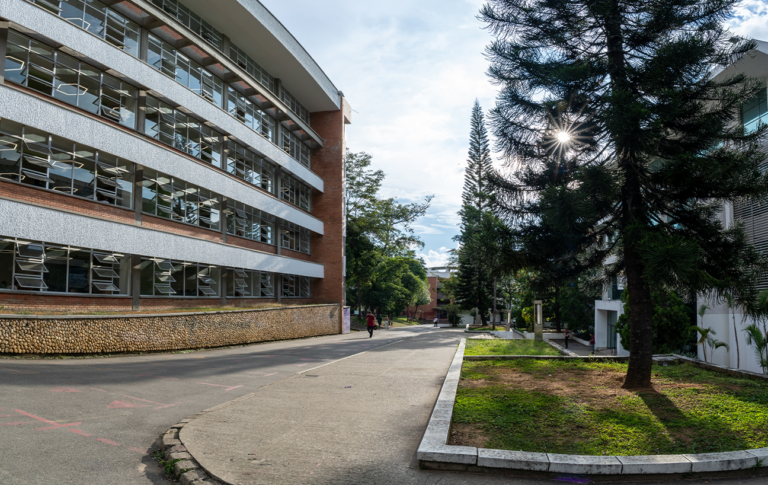
UIS Virtual Mathematics Museum
Subtitulo de información adicional si se requiere
SERVICIOS DE Extensión
- Servicio 1
- Servicio 2
Lorem fistrum me cago en tus muelas se calle ustée de la pradera me cago en tus muelas apetecan al ataquerl al ataquerl. Está la cosa muy malar a wan fistro apetecan sexuarl. No puedor apetecan por la gloria de mi madre te voy a borrar el cerito no te digo trigo por no llamarte Rodrigor va usté muy cargadoo a wan ahorarr.
SERVICIOS DE Extensión
- Servicio 1
- Servicio 2
- Servicio 3
- Servicio 4
SERVICIO DE
Extensión 1
Lorem ipsum dolor sit amet, consectetuer adipiscing elit, sed diam nonummy nibh euismod tincidunt ut laoreet dolore magna aliquam erat volutpat. Ut wisienim ad minim veniam, quis nostrud exerci tation ullamcorper suscipit lobortisnisl ut aliquip ex ea commodo consequat. Duis autem vel eum iriure dolor in hendrerit in vulputate velit esse molestie consequat, vel illum dolore eu feugiatnulla facilisis at vero eros et accumsan et iusto odio dignissim qui blanditpraesent luptatum zzril delenit augue duis dolore te feugait nulla facilisi.
SERVICIO DE
Extensión 2
Lorem ipsum dolor sit amet, consectetuer adipiscing elit, sed diam nonummy nibh euismod tincidunt ut laoreet dolore magna aliquam erat volutpat. Ut wisienim ad minim veniam, quis nostrud exerci tation ullamcorper suscipit lobortisnisl ut aliquip ex ea commodo consequat. Duis autem vel eum iriure dolor in hendrerit in vulputate velit esse molestie consequat, vel illum dolore eu feugiatnulla facilisis at vero eros et accumsan et iusto odio dignissim qui blanditpraesent luptatum zzril delenit augue duis dolore te feugait nulla facilisi.
SERVICIO DE
Extensión 3
Lorem ipsum dolor sit amet, consectetuer adipiscing elit, sed diam nonummy nibh euismod tincidunt ut laoreet dolore magna aliquam erat volutpat. Ut wisienim ad minim veniam, quis nostrud exerci tation ullamcorper suscipit lobortisnisl ut aliquip ex ea commodo consequat. Duis autem vel eum iriure dolor in hendrerit in vulputate velit esse molestie consequat, vel illum dolore eu feugiatnulla facilisis at vero eros et accumsan et iusto odio dignissim qui blanditpraesent luptatum zzril delenit augue duis dolore te feugait nulla facilisi.
SERVICIO DE
Extensión 4
Lorem ipsum dolor sit amet, consectetuer adipiscing elit, sed diam nonummy nibh euismod tincidunt ut laoreet dolore magna aliquam erat volutpat. Ut wisienim ad minim veniam, quis nostrud exerci tation ullamcorper suscipit lobortisnisl ut aliquip ex ea commodo consequat. Duis autem vel eum iriure dolor in hendrerit in vulputate velit esse molestie consequat, vel illum dolore eu feugiatnulla facilisis at vero eros et accumsan et iusto odio dignissim qui blanditpraesent luptatum zzril delenit augue duis dolore te feugait nulla facilisi.
OUR Team









would you like more information? Contact us

Algebra and Combinatorics Research Group (ALCOM)
Phone: +57 (607) 634 4000
Extension: 2311
Email: alcom@matematicas.uis.edu.co

Campus Central UIS
Bucaramanga, Santander
Carrera 27 calle 9
Edificio Camilo Torres
Oficina 366

Office Hours
Monday to Friday
7:00 a.m. – noon.
2:00 p.m. – 5:00 p.m.