RESEARCH GROUP
New Materials Development and Technology (GIMAT)
Inicio > Investigación > Research Groups > Development and Technology of New Materials Research Group (GIMAT)
ABOUT OUR Group
The New Materials Development and Technology Research Group (GIMAT) at the Universidad Industrial de Santander conducts research on the design, processing, characterization, and evaluation of innovative and sustainable materials for a wide range of technological applications. The group contributes to the education of undergraduate and graduate students while promoting knowledge transfer through research projects, outreach services, and collaborative initiatives with the productive sector. It also strengthens strategic partnerships and disseminates its research findings through national and international scientific forums.
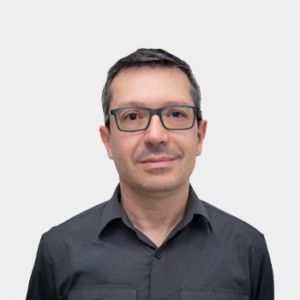
Ana Emilse
CORY ECHEVERRÍA
Research Group Director
Contact us


RESEARCH Lines
Hydrogen Degradation and Damage in Metallic Materials
This research line investigates the mechanisms of hydrogen-induced degradation and embrittlement in metallic materials used in the energy, petrochemical, and transportation industries. Its objective is to understand the mechanisms responsible for material deterioration and to develop strategies that enhance the reliability and structural integrity of materials exposed to aggressive environments.
Applied Electrochemistry and Corrosion
This research line focuses on evaluating the electrochemical behavior and corrosion resistance of different materials using techniques such as electrochemical impedance spectroscopy and polarization resistance measurements. Its objective is to understand degradation mechanisms and contribute to the design of materials with enhanced durability.
Materials for Energy Storage and Conversion
This research line focuses on the development and characterization of materials for sustainable energy applications, including supercapacitors, electrodes, and other devices for energy storage and conversion. It also investigates the utilization of naturally derived raw materials and agro-industrial waste to produce functional materials.
Biomaterials and Materials for Tissue Engineering
This research line focuses on the design and development of biocompatible materials for biomedical applications, including scaffolds for bone tissue regeneration, bioactive coatings, and materials with mechanical properties similar to those of natural bone.
Coatings and Surface Modification
This research line aims to enhance the surface properties of metallic and ceramic materials through the development of functional coatings and surface engineering techniques, with applications in corrosion protection, wear resistance, and biomedical devices.
Structural Integrity and Failure Analysis
This research line focuses on the mechanical characterization, failure analysis, and performance evaluation of materials and components used in industrial applications. It includes studies on corrosion, fracture, mechanical strength, and the structural integrity assessment of pipelines, steels, and other structural systems.

Adsorption and Photocatalysis Processes
This research line focuses on the development and characterization of adsorbent and photocatalytic materials for environmental applications, particularly in water treatment and the degradation of pollutants, through the use of sustainable and high-efficiency technologies.
Polymers and Materials Processing
This research line focuses on the development and processing of polymeric and composite materials derived from recycled polymers and natural fibers to produce high-performance, sustainable materials, including wood–plastic composites and other value-added products for applications in the construction, industrial, and environmental sectors.
Characterization and Development of New Materials
This research line serves as a cross-cutting area within the group, focusing on the study of the processing–structure–property relationships of metallic, ceramic, polymeric, and composite materials, with the aim of developing solutions to technological challenges of regional and national importance. This research area is an integral part of the group’s strategic plan.
Senior or Associate Professors
A1 and A-Ranked Articles
Academic Programs
Semillero de Investigación
Nombre del Semillero 1
Nombre del Semillero 2
PRODUCCIÓN Destacada
FEATURED Publications
SERVICIOS DE Extensión
- Servicio 1
- Servicio 2
Lorem fistrum me cago en tus muelas se calle ustée de la pradera me cago en tus muelas apetecan al ataquerl al ataquerl. Está la cosa muy malar a wan fistro apetecan sexuarl. No puedor apetecan por la gloria de mi madre te voy a borrar el cerito no te digo trigo por no llamarte Rodrigor va usté muy cargadoo a wan ahorarr.
EXTENSION Services
- 2D Microscopy and 3D Surface Reconstruction
- Mechanical Testing
- Electrochemical Corrosion Evaluation
- Corrosion Rate Determination by Mass Loss
- Component Failure Analysis
- Hydrogen Diffusion and Embrittlement
- Thermal Spray Coatings
- Computer-Aided Design and 3D Printing
2D MICROSCOPY AND THREE-DIMENSIONAL
Surface Reconstruction
This service provides microstructural and topographical characterization using confocal optical microscopy, enabling the acquisition of two-dimensional images and three-dimensional surface reconstructions for the analysis of materials and components.
Features: Enables roughness measurements, surface profile analysis, and non-contact morphological characterization of samples compatible with the available equipment.
MECHANICAL
Testing
This service provides the determination of mechanical properties through tensile, compression, and three-point bending tests.
Features: All tests are performed in accordance with applicable technical standards and predefined specifications.
ELECTROCHEMICAL CORROSION
Evaluation
Determination of uniform and localized corrosion phenomena using electrochemical impedance spectroscopy (EIS), Tafel extrapolation, linear polarization, potentiodynamic polarization curves, and electrochemical noise techniques.
Features: The material, exposure environment, and testing conditions must be defined in advance.
CORROSION RATE DETERMINATION BY
Mass Loss
Evaluation of mass loss and estimation of the corrosion rate of metallic materials exposed to different environments.
Features: Exposure times and testing conditions are established according to the applicable standard or the client’s requirements.
COMPONENT FAILURE
Analysis
Study of the causes of failures in mechanical components and structures through characterization techniques and metallurgical analysis.
Features: Information on the service conditions and representative samples of the component is required.
HYDROGEN DIFFUSION AND
Embrittlement Studies
Evaluation of the behavior of metallic materials subjected to hydrogen absorption and hydrogen-induced damage.
Features: Testing is conducted under controlled conditions and according to the specific requirements of the study.
THERMAL SPRAY
Coatings
Application of functional coatings to improve wear resistance, corrosion resistance, and other surface properties.
Features: The type of coating and the deposition conditions are established according to the required application.
COMPUTER-AIDED
Design and 3D Printing
Design and fabrication of components using additive manufacturing technologies with PLA, nylon, and carbon fiber-reinforced materials.
Features: The design and manufacturing specifications are established according to the user’s requirements.
OUR Team
Nombre del miembro del grupo Máximo título académico
would you like more information? Contact us
New Materials Development and Technology Research Group (GIMAT)
Phone: +57 (607) 634 4000
Extension: 1504
Email: gimat@uis.edu.co
Campus Central UIS
Bucaramanga, Santander
Carrera 27 calle 9
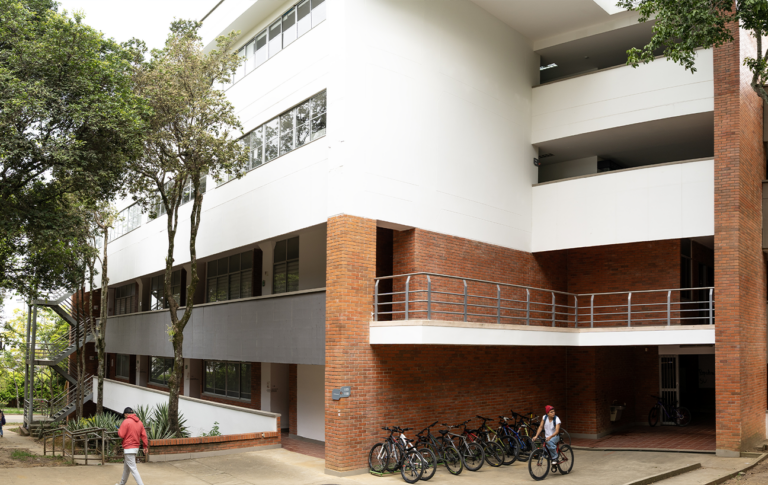
Edificio Jorge Bautista Vesga (JBV)
Laboratorio 210
Office Hours
Monday to Friday
7:00 a.m. – noon.
2:00 p.m. – 5:00 p.m.