RESEARCH GROUP

History, Archival Science, and Research Networks (HARED)

ABOUT OUR Group

Since its establishment in 2005, the HARED Research Group has been distinguished by its interdisciplinary approach, bringing together members from diverse professional backgrounds. Its research focuses on memory reconstruction, archives, the protection of human rights, and studies related to violence and the armed conflict in Colombia. HARED promotes the production of critical knowledge on the experiences of communities, the preservation of collective memory, efforts to protect territories, social justice, and the understanding of the multiple forms of violence. Through this work, the group seeks to contribute to the construction of lasting peace and to the strengthening of the principles of Truth, Justice, Reparation, and Non-Repetition.

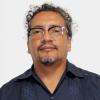
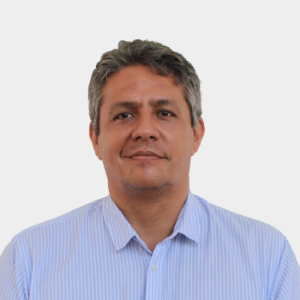
Photograph of team member Helwar Fernando Figueroa

Helwar Hernando
FIGUEROA SALAMANCA

Research Group Director

Contáctenos

RESEARCH Lines

The purpose of this research line is to create spaces for reflection and research around three closely interconnected thematic areas: oral and iconographic archives, diverse forms of memory, and cultural heritage.

Within the context of the Colombian conflict, efforts to uncover the truth have transformed and enriched traditional archives, which until recently primarily preserved institutional memories and records from a hegemonic, traditionalist, and patriarchal perspective. Today, across the country’s diverse territories, both the memories of the armed conflict and those associated with cultural heritage are reflected in oral testimonies, material expressions created by communities and imbued with symbolic meaning, and a wide range of community-based iconographic materials. These constitute a fundamental source of inquiry for the social sciences, not only because social scientists study and use them as primary sources, but also because their work contributes to their recovery, preservation, and safeguarding.

This research line examines how communities shaped through diverse processes of settlement and resistance in Colombia have strengthened their communal organization in response to environmental challenges and social exclusion, often with limited support from the State, which has appeared only sporadically to confront or contest territorial control exercised by multiple illegal armed groups that, in many cases, impose an alternative social order through violence.

Accordingly, this research line seeks to understand how these territorial and identity-based communities have organized and sustained collective action. To achieve this, it draws on theoretical and conceptual debates in the field of social movement studies. From HARED’s perspective, social movements are understood as non-institutionalized groups of individuals or communities that endure over time and employ diverse repertoires of protest (collective actions) to advocate for rights and social guarantees, equality, and justice.

This research line seeks to contribute to the understanding of the war–peace dichotomy in Colombia and the challenges the State faces in overcoming it, given its limited capacity to establish a sustained and homogeneous presence throughout the country. Instead, State intervention has often been partial, following the paths opened by settler-farming communities in their efforts to distance themselves from the expansionist ambitions of large landowners.

Despite the extensive body of research on violence and the armed conflict, as well as the growing publication of testimonies from victims and perpetrators, further research is still needed to deepen the understanding of the causes, origins, diversity, and persistence of war, as well as the ways in which it has been studied and interpreted.

This research line examines the historical processes that have shaped patterns of health, disease, and health care across populations, exploring the interaction of social, economic, political, cultural, and environmental factors in different contexts and historical periods. Its purpose is to understand population health as a historically constructed phenomenon, resulting from complex social dynamics, institutional transformations, knowledge production, power relations, and changes in living conditions, rather than as the outcome of exclusively technical or biomedical developments.

This research line also investigates how societies have defined, interpreted, and addressed health and disease, considering the diverse perspectives of the actors involved, including communities, patients, health professionals, institutions, and the State. It also examines the evolution of health policies, health care systems, preventive practices, and societal responses to epidemics, public health crises, and other challenges that have shaped population development.

In addition, it promotes the critical analysis of health inequalities and the historical determinants that have influenced the unequal distribution of risks, resources, and opportunities among different social groups.

B

MinCiencias
Classification

*2024 Group Recognition Call

Icono de cantidad de profesores en categoría Senior o asociado según MinCiencias
0

Senior or Associate Professors

Icono de cantidad de artículos en categoría A1 y A
0

A1 and A-Ranked Articles

Icono de cantidad de programas académicos vinculados al grupo de investigación
0

Academic Programs

Espacio especial para servicios o proyectos

Subtitulo de información adicional si se requiere

EXTENSION Services

ARCHIVE

Organization

Organization and digitization of administrative, historical, and human rights archives.

MEMORY FACILITATOR

Training

Training for memory facilitators.

MEMORY-

Building

Conflict memory-building.

EXHIBITION

Curation

Exhibition design and curation.

OUR Team

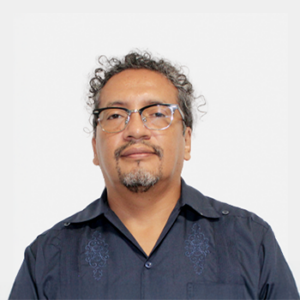
Photograph of team member Alvaro Javier Idrovo

Álvaro Javier
IDROVO VELANDIA

PhD in Public Health Sciences (Concentration in Epidemiology)

Claudia Milena
QUIJANO MEJÍA

PhD in Sociology

Photograph of team member Helwar Fernando Figueroa

Helwar Hernando
FIGUEROA SALAMANCA

PhD in Latin American Studies

Daniel Orlando RAMÍREZ Master's Degree in History

Paula Jemima CARREÑO GÓMEZ Historian and Archivist

Sergio Andrés ACOSTA LOZANO Master's Degree in History

Sergio Andrés UTRERA SANTANDER Master's Degree in Information and Documentation Management

would you like more information? Contact us

Icono de la unidad con la que se puede contactar

History, Archival Science, and Research Networks 

Phone: +57 (607) 634 4000

Extension: 1097

Email: helwarff@uis.edu.co

Icono de ubicación de la unidad que atiende

Campus Central UIS

Bucaramanga, Santander

Carrera 27 calle 9

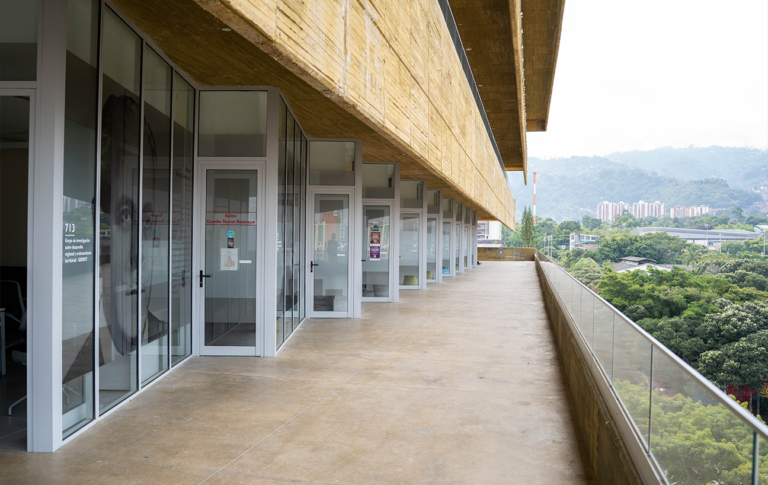
Edificio de Ciencias Humanas II, piso 7

Icono horario de atención

Office Hours

Monday to Friday

8:00 a.m. – noon.

Skip to content