Research Group
Tiempo Cero Research Group
Inicio > Investigación > Tiempo Cero Research Group
ABOUT OUR Group
The Tiempo Cero Research Group is primarily composed of professors from the School of Philosophy. It conducts its work within the Universidad Industrial de Santander’s institutional research and extension policies and is endorsed by the VIE-UIS and registered with Minciencias. It is currently classified in Category A according to Minciencias’ 2024 call for research groups.
The Tiempo Cero Research Group has distinguished itself by consolidating interdisciplinary and experimental research interests, particularly at the intersection of philosophy, technology studies, linguistics, pedagogy, and aesthetics.


RESEARCH Lines
Digital Languages
Digital computing technology permeates every layer of society (dimensions, human groups, everyday life, conflicts, and developments). This technology is constantly evolving and has become a major factor shaping new situations emerging in society. Drawing on different philosophical approaches and adopting a transdisciplinary perspective, this research line examines this reality and the phenomena it encompasses, ranging from artificial intelligence and its influence on education to the appropriation of technology within local contexts.
Philosophy Teaching
Western philosophical thought has a tradition spanning more than two millennia and constitutes a foundational aspect of Western society. This entails the transmission and transduction of its systems, schools, and institutions. In Western society, teaching has acquired a distinctive central role as a result of the consolidation of democracy, both politically and epistemologically.
Histories of Philosophies
Western philosophy is generally considered to have originated in ancient Greece in the 6th century BCE. However, the study of the history of philosophy should not be limited to Western thought but should encompass all forms of thought, regardless of their proximity to Western culture. Accordingly, there is not one history but multiple histories, just as there is not one philosophy but multiple philosophies. The focus of this research line is therefore the study of the multiplicity and diversity of thinkers, conceptions, systems, and philosophical traditions.
Aesthetics and Philosophy of Art
Since the classification of the arts (literature and poetry, music, film, visual arts, and performing arts), their study has become central to understanding artistic and cultural manifestations and their role in society, particularly their early and close interconnection with politics.
Experimental Philosophy
Experimental philosophy is an area of philosophy that incorporates methodologies from social psychology in an effort to address fundamental questions concerning how human beings are constituted, particularly the functioning of the human mind in ontogenetic development and phylogenetic relationships. Its aim involves discussing a wide range of ideas advanced by conceptual philosophy and other fields of knowledge.
Experimental philosophy recognizes two research programs: the positive and the negative. The positive program holds that it should be empirically determined what people’s intuitions are regarding particular cases, with the aim of substantiating or developing philosophical notions, concepts, or theories. In this sense, the work of the positive program may be regarded as complementary to, or at least continuous with, the conceptual philosophical project. The negative program, by contrast, seeks to challenge certain dominant methods and perspectives in philosophy, such as the use of thought experiments and, more specifically, philosophical generalizations formulated on the basis of the particular intuitions of individuals regarded as leading figures in philosophy.
Senior or Associate Professors
A1 and A -Ranked Articles
Academic Programs
FEATURED Publications
Espacio especial para servicios o proyectos
Subtitulo de información adicional si se requiere
EXTENSION Services
- Advisory Services for Social Appropriation
- Advisory Services in Experimental Ethics
- Document Evaluation
ADVISORY SERVICES FOR
Social Appropriation
Advisory services for training processes aimed at the social appropriation of technological knowledge.
ADVISORY SERVICES IN
Experimental Ethics
Advisory services for training processes in experimental ethics and experimental methodologies in the humanities.
EVALUATION OF
Documents
Conceptual evaluation of documents (books, articles, and research projects).
OUR Team
Daniel Ricardo MOGOLLÓN PhD in Philosophy
Nombre del miembro del grupo Máximo título académico
would you like more information? Contact us
Tiempo Cero Research Group
Phone: +57 (607) 634 4000
Extension: 1211 – 2253 – 2516
Email: tiempocero@uis.edu.co
Campus Central UIS
Bucaramanga, Santander
Carrera 27 calle 9
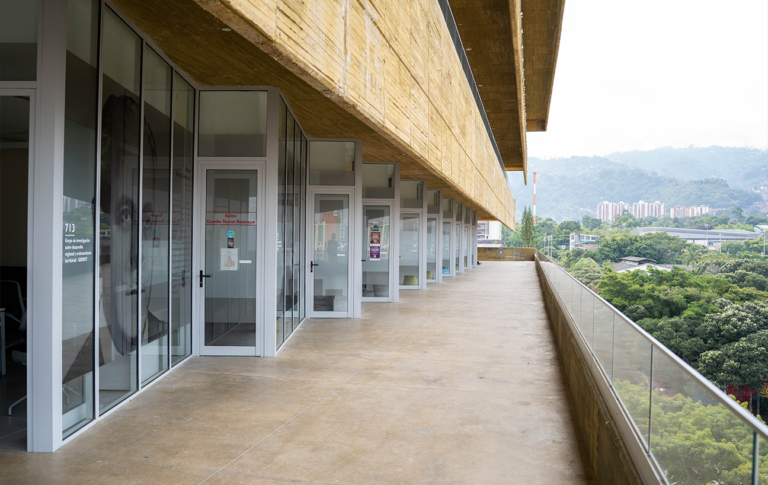
Edificio de Ciencias Humanas II, piso 9
Office Hours
Monday to Friday
7:00 a.m. – noon.
2:00 p.m. – 5:00 p.m.